The Yale Review is partnering with Shakespeare and Company, the legendary Paris bookshop, to publish select transcripts from its author events—insightful conversations with some of today’s most exciting writers from around the world. Sign up for our newsletter to be the first to know when new interviews go live. Readers can also explore the best of earlier installments, culled from the last decade of the shop’s long-running conversation series, in The Shakespeare and Company Book of Interviews, out now. Listen to the latest episodes of The Shakespeare and Company Interview podcast here.
Miriam Toews
The author of A Truce That Is Not Peace on how writing resembles loss
Adam Biles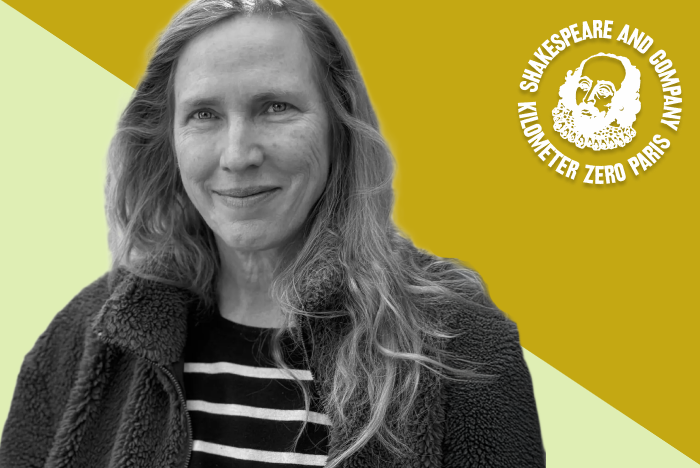
At the beginning of Miriam Toews’s new memoir, A Truce That Is Not Peace, we find the author invited to participate in a literary “conversación” in Mexico City, where she is tasked with addressing the question “Why do I write?” Despite that being, as Toews puts it, a “douchebag question,” she begins to grapple with it. As she explores its many possible answers and implications, she takes us on a profound and often perilous journey through her mind and into her past. Though a memoir of loss and grief (both Toews’s father and sister died by suicide), A Truce That Is Not Peace is also an exploration of writing—why Toews does it, what effects it has on her life, and its impact, or lack thereof, on the world. In October of 2025 at Shakespeare and Company in Paris, I spoke remotely with Toews, who was in Toronto, about narrative and what motivates the desire to give shape to life, even as it resists all our efforts to contain it. This interview has been edited for clarity and length.
—adam biles, literary director, shakespeare and company, paris
adam biles Let’s begin with that “douchebag” question from the Conversación Comité in Mexico City: Why do you write? Was this something that you had previously given much thought to?
miriam toews It’s a standard question, but I never really had a good answer for it. Before I started writing this book, I was deep in some sort of period of doubt, a kind of crisis of faith. In writing, really, not so much living, although there were shades of that. Just this sense of futility. I was thinking, actually, about maybe not writing anymore. Maybe thinking, Okay, I think I’ve written enough.
And it was from that thinking, which was so tinged with hopelessness and despair and futility, that the question arose again: Why do I write? So I thought, Okay, I want to attempt to answer that question. Because this idea of not writing scared me.
ab As you tell it, the committee is repeatedly unhappy with the responses you provide, so you keep getting sent back upon yourself to reconsider the question from different angles. One of these is to look at it as part of the narrative of your life, in both how writing became a part of your life and how your story as a whole is constructed. But as the book goes on, we encounter your creeping doubt that life can be looked at as story at all.
mt Exactly. There is no tidy narrative. No template. No discernible arc to our lives. And yet, because we’re writers, we spend our lives in search of that story, of that narrative, of that arc, and therein lies the tension.
So, in a sense, the book is a story of my life, but it sort of exists in spite of itself, because it shows that there is no way of telling a coherent story of life. My agent described it really well. She said it’s like building a wall and knocking it down at the same time.
ab One way this book attempts to locate meaning is in, we might say, metaphor. There’s the repeated appearance of this skunk at your house who’s trying to get back to the plot of land where she previously lived. You also have the idea of a wind museum, which takes on increasing meaning as we go through the book. How useful were these metaphors for you once you had, at least to some extent, disposed of narrative for understanding why you write?
It’s the idea of writing as a way of controlling the narrative, of taking everything—the chaos of the swirl, the wind of all our ideas and thoughts—and crafting something that makes sense.
mt The ridiculous idea of the wind museum—the idea that I would be able to contain the winds of the world in a museum, in a building, in different rooms—was really funny to me. And it works as a metaphor for what writing is. Because the idea that we can take everything inside of us—our thoughts, our feelings, our notions, our ideas—and somehow contain them all in a book is just as ridiculous. And yet we do. I mean, we don’t achieve it. We’re not successful at it. But we make the effort. I think it’s in the effort that life exists.
ab You also come back several times to this idea, a paraphrase of W. B. Yeats, of thinking about life as a tragedy in order to be able to live it. It seems to me there are different ways to understand that. It could be seen as quite a romantic pronouncement. If you know that every life ends in tragedy, then it will somehow galvanize you to live it. But it could also induce a kind of quietism.
mt I’m with you. I think different things about it at different times. I do agree with Yeats that to see life as a tragedy is a way to move forward. That life in all of its variously beautiful ways is, at the heart of it, a tragedy. Just the fact that we’re all going to die. The Buddhists say, of course, that life is suffering. That comforts me when I’m in a particularly anxious time. When I’m up at night, I repeat it as a mantra almost. Then I feel less alone. My suffering is your suffering. My joy is your joy. We’re in this together. But life is also a comedy. I think you can hold both thoughts at the same time. My mother, for instance, fully holds those two thoughts at the same time. I think she sees life as a tragedy, which gives her the strength to laugh at it.
ab So much of the way you look at life has to do with the Mennonite community that your family eventually left. And this community not only has its beliefs and its structure and its community but also its language. Once you leave all that behind, you’re completely on your own. How much do you think your grappling with the world was shaped by this unique early experience?
mt You’re absolutely right that it created a framework for living. The Bible, the Scripture—that was our manual. The rules of living were put down by Moses in the Bible but also by the elders in my church. By these real human men who felt that they did have this divine knowledge and power. And that gives a great deal of structure and a way of looking at the world. It’s very black and white, of course. What’s good, what’s bad, what is a sin, what you’ll be punished for, what you will be blessed by. I left as soon as I could, as soon as I finished high school at eighteen, and went to Montreal. I still have this visceral memory of wandering the streets of Montreal, just trying to figure out who I was, where I belonged. I knew that I couldn’t go back to my community. But I certainly didn’t feel at home in Montreal at that point. Now I’m older, and I think so much more about my community. There are so many things that I can actually appreciate about it. Many, many, many things, too, that I will never appreciate about it or forgive. But like the skunk in the book, I think I make attempts all the time, in my writing, to go back, to put myself back in that community. But I’m confronted with a locked door.
The world was just a delicious thing to them. And it was they who gave me the world.
ab Your community looks on you in the same way that you look on the skunk?
mt Yeah, exactly. I am the skunk.
ab It’s no spoiler to say that a lot of the book has to do with the fact that your father and your sister both took their own lives. And yet, when I read about the family, I don’t sense fragility. Your father, your mother, your sister—they all seem to be, in many ways, very robust people. People put together for this world.
mt I agree. I wouldn’t characterize anybody in my family, particularly my father and my sister, as fragile. They suffered from profound mental illness and then took their own lives. But it wasn’t a fragility. I really like the way you said that they seem to be put together for this world. That’s such an interesting thing to say. And it’s true. They really were curious people. They were social people. They wanted to be in the world. My father thrived outside the community. My sister as well—travel, university, study. The world was just a delicious thing to them. And it was they who gave me the world, who showed me the world, who introduced me to the world through literature and books and history and music. So, no, there wasn’t a fragility there.
But I think they built that armor for themselves. My sister, for instance. At the end of her life, she was begging me to help her die; she was begging me to take her to Switzerland, to a place where she would be able to be assisted in dying. I said, “No, you have to fight now.” And she looked at me and said, “Miriam, I have been fighting for forty years.” And a real light went on then. I realized, yes, that was true. She and my father—the effort, the energy they put toward living, toward being in the world, consuming life with a great deal of vigor and curiosity and all of those things. Nothing fragile about it.
ab One thing we sense from your mother is a profound worry. Early on, there’s a story you tell about climbing an apple tree, and you’re high up in the branches, and your mother calls you down to do a job for her, to pick up some tomatoes. We realize that when she saw you up in that tree, there was something beyond the worry that perhaps we all feel as parents when we see our kid in a slightly perilous situation. She sensed not the fragility of the person but the fragility of life itself.
mt I think she became attuned to it at a very young age. She knew my father from the age of five. They were raised together, essentially, and she could sort of track him—these impulses and the suffering, what started off being called just melancholy and was then ultimately diagnosed as bipolar disorder. I don’t think it was something that they talked about, necessarily. I don’t think my father said, “I want to die.” I think it’s something that my mother has just been acutely sensitive to almost her entire life. But at the same time, she also did come to a place—and it’s a place where I’m hopefully at as well—of fully understanding and respecting this choice that they made. To take it seriously and attempt to understand how it can happen and why it happens, and to respect that.
ab There are several moments in the book when you draw a connection—and it’s not a simple one—between the act of writing and the act of taking one’s own life. It seems to be connected to assuming a level of control over life, or over something in your life. And yet you also resist saying that writing is, in some way, an antidote to these feelings.
mt It’s the idea of writing as a way of controlling the narrative, of taking everything—the chaos of the swirl, the wind of all our ideas and thoughts—and crafting something that makes sense. And I think there’s an element of that to suicide as well. It’s not just an attempt to say, “Okay, I have decided I can’t, I don’t want to live anymore, and I’m going to do this.” It’s also a sense of disappearing oneself. Of taking all that hard stuff that’s inside and putting it elsewhere, getting away from it. When I’ve finished a book, it’s like, “Okay, good. That’s done. That’s over. Get it away from me.” There’s a similarity with suicide there. I need to disappear from myself. I need to get away from myself. I don’t necessarily want to die, but I certainly don’t want to live. That’s the conundrum, right? But then there’s silence as well. In the book, I’m attempting to think, not draw any conclusions, just think about the connection between writing and silence.
The humor, the writing, the taking note of absurdity. A rebelliousness against life. That’s how Camus felt too.
ab It’s a practice you share with your father and sister, who both went through periods of prolonged silence. As a reader, it’s difficult not to think that they were trying out what a world with their silence would be like.
mt The book is about my attempt to find connection, to really meet my sister, in the spaces between words, in the silence. And my inability to do that, my reluctance to go there. There’s just such a huge abyss between the pain of the feelings and the articulation of that pain, whether it’s manifested in silence or whether it’s manifested in writing a story. It’s that time in between. I think that’s where I can maybe meet her in my mind.
ab There is a section of letters to your sister from when you were traveling around Ireland and Britain and Europe as a young woman with Wolfie, your boyfriend at the time. These are just hysterically entertaining pieces of writing.
mt A couple of years before my sister died in 2010, she was going through her stuff, and she found these letters. The ones in the book are just a fraction of them. We looked at them and had a good laugh. I was eighteen. I was young and pretentious and stupid and heading off with my boyfriend.
My sister had moved home from university. She was very sick. A deep depressive episode. She said to me, “You have to write me, you have to write.” We made this deal, which, of course, is ridiculous in retrospect—writing letters isn’t going to save a person’s life. But she said, “You write, and I’ll live.” That was the deal. And we said it in a kind of humorous way, but I really took it seriously. I felt a real sense of urgency.
After a while, I forgot about them. Many decades passed before she showed me these letters, and when I read them, I realized that I had been trying to entertain her. I was attempting to make her smile. It was the first time that I had ever written intimately about myself. It hadn’t occurred to me to write letters to anybody before she asked me to. I was finding, in the writing of them, a real—I don’t know what you want to call it—joy, I suppose. Little things were going off in my brain, like, Oh, this is great. I’ve got the characters, I’ve got the setting, I’ve certainly got the conflict. I had fun writing. So when the Conversación Comité asked, “Why do you write?,” one of the answers, one of the potential answers, or nonanswers, could have been: “Well, she asked me to.”
ab This feels like a family invested in the idea of comedy, in the idea of making each other laugh, and in the idea of clowning.
mt Absolutely. A family of clowns. It’s true. We’re a bit of a three-ring circus. When we get together, it’s almost like a comedy-off. Like, Okay, what do you have? Let’s hear it! There are all sorts of reasons for that. A way of seeing the world, a way of being in the world. A necessary way of being, of survival, of solidarity through comedy, through the joke, through humor. It’s an emotional release. There’s an honesty when it’s good, when it’s working, that is difficult to tap into outside of comedy. And for me, it’s a tool for getting to a kind of intimacy.
ab In our last conversation, when we were talking about your novel Fight Night, we spent quite a bit of time talking about Camus. This came back to me when reading A Truce That Is Not Peace, because there seems to be an act of rebellion in laughter. Rebellion against the absurdity of life, rebellion against the tragedy of life, against the nothingness, against the meaninglessness of the universe.
mt I think that comes from the community I grew up in—that idea of throwing stones at the castle wall. Particularly for us women. Myself, my sister, my mother—we were always rebelling to a certain degree. When I started writing, the work was an act of rebellion. An act of subversiveness. But also a philosophical one. The humor, the writing, the taking note of absurdity. A rebelliousness against life. That’s how Camus felt too. That it is absurd. That there is no meaning. That there’s no reason to this crazy place of pain and ridiculousness. And yet, it’s what we have. So let’s be in it.
If you are having thoughts of suicide, call or text 988 to reach the 988 Suicide Crisis Lifeline. Additional resources can be found here.
Adam Biles is a novelist, and Literary Director at Shakespeare and Company, Paris.
Originally published:
November 12, 2025
Featured
What Happened When I Began to Speak Welsh
By learning my family's language, I hoped to join their conversation.
Dan Fox
When Does a Divorce Begin?
Most people think of it as failure. For me it was an achievement.
Anahid Nersessian
You Might Also Like
Support Our Writers
A sustaining subscription provides vital, ongoing support for The Yale Review and the writers we publish—and includes new holiday merch.
Become a Sustaining Subscriber