most black kids who grew up in “integrated” (read: predominantly white) neighborhoods or schools have a story to tell about white kids trying to play with their hair. Typically, these stories are told as parables of humiliation, with the hapless Black child poked and prodded like a sideshow freak. My experience with this sort of attention was bittersweet. It involved a very attractive and popular blond senior who thought nothing of sidling up to a freshman and, uninvited, pushing her lacquered nails through my tight curls.It’s so springy! How do you comb it? Do you get bed head, or does it just bounce back? I froze as a smirking crowd gathered, then decided there was nothing to do but roll with it. No, it doesn’t bounce back—how about you? Do you get up and shake your head like those girls in the shampoo commercials and your hair just falls into place? I heard all white babies are born with blond hair and it gets dark later—how’d you keep yours from changing? By the end of the back-and-forth, I’d made a friend, of a sort. I never had to wait in line for anything when my new interlocutor was around (she never waited in line for anything). That didn’t erase the initial humiliation. But it helped.
The encounter also taught me that I was not going to be able to hide in a corner and escape notice like the awkward white kids did. I was going to stand out. Better to own it. This realization made me begin to experiment with clothing, trying out different styles: preppy (years before André 3000 and Lil Yachty, a Black preppy seemed an irresistibly funny contradiction), punk, hip-hop, rude boy.
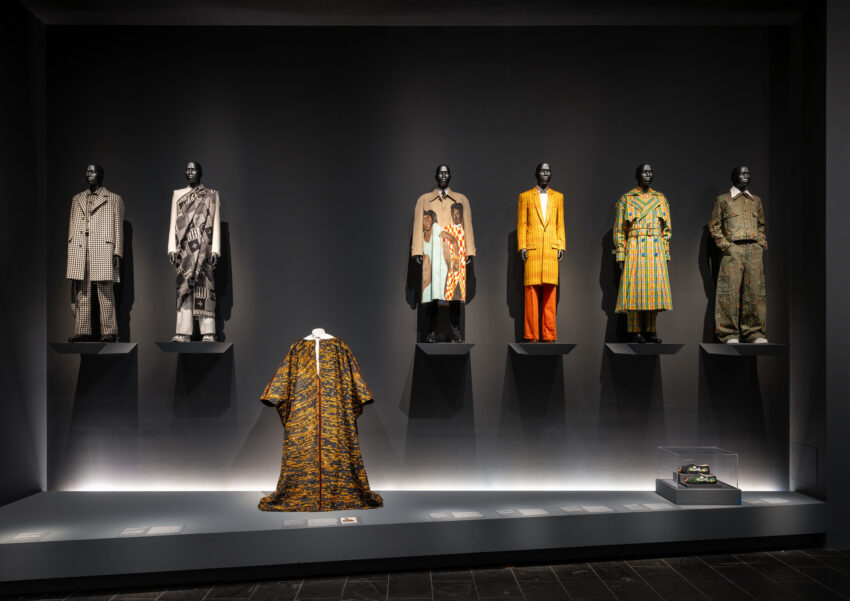
In Western societies, a Black body is prefigured as a curiosity. Fashion is a way to turn this into an advantage, to take control of the drama and exert agency. So it’s no surprise that a consistent theme of Superfine: Tailoring Black Style, the terrific new exhibition organized by the Costume Institute of the Metropolitan Museum of Art, New York, is the theatricality of Black fashion. Black style is often one of aggressive artifice, exaggerated display, performance, entertainment. It can make one a superstar or chattel, or both. Many of today’s Black dandies are professional exhibitionists: musicians, athletes, actors, public intellectuals. But the catalog for the exhibition also presents the clothing of “luxury slaves” dressed to demonstrate the wealth of their masters—white supremacy’s equivalent of a French bulldog dressed in a designer sweater. This foregrounds an implicit tension in the idea of the Black dandy: the exuberant celebration of the liberated Black body versus the ever-present demands of what critical theorists might call racial capitalism, or the imperative to sell that body—its labor, its beauty, its gracefulness, its erotic power—in order to pay the rent, to say nothing of the tailor’s bills. Superfine
is a bittersweet experience. Each image of uncompromising style and panache is filtered through a lens of racial hierarchy and the compromises and humiliations it extracts.
Dandyism complicates definitions of racial identity. Perhaps more powerfully, it shakes up conventional understandings of gender identity too. Charles Baudelaire, the would-be poet laureate of dandyism, wrote that the dandy has “le besoin ardent de se faire une originalité, contenu dans les limites extérieures des convenances”—an ardent need to be original, within the limits of propriety. The archetypal male dandy is concerned with cutting a striking figure, and to do so he often adopts elements of dress and grooming associated with women. This was not always the case. As the art and dress historian Anne Hollander points out, for hundreds of years, “the fastest and sexiest advances in Western costume . . . were made in male fashion.” But in the late eighteenth century, European men’s fashion turned away from the sumptuous and flamboyant attire of the ancien régime’s aristocracy (powdered wigs, ceremonial swords, high-heeled shoes, precious stones, lace, brocade) and toward the minimalism of the somber-toned business suit. In 1930, the psychologist John Carl Flügel—who was also a member of the Men’s Dress Reform Party, which aimed to soften the rules of male dress to improve health and hygiene—called this the Great Masculine Renunciation. The new men’s fashions spoke to the emerging values of the Enlightenment: industriousness, thrift, rationality, modernity, and, to an extent, egalitarianism (for the first time, a head of state might wear clothing similar to that of a shopkeeper). Extravagant dress suggested the opposite: indolence, profligacy, flightiness, backwardness, elitism—and, of course, effeminacy. The streamlined modern fashions were exclusive to men; women’s fashions retained what became anachronistic adornments and flourishes. Consequently, they communicated outmoded values of showiness and excessive self-regard. But they also offered a much richer sartorial vocabulary for original self-expression.
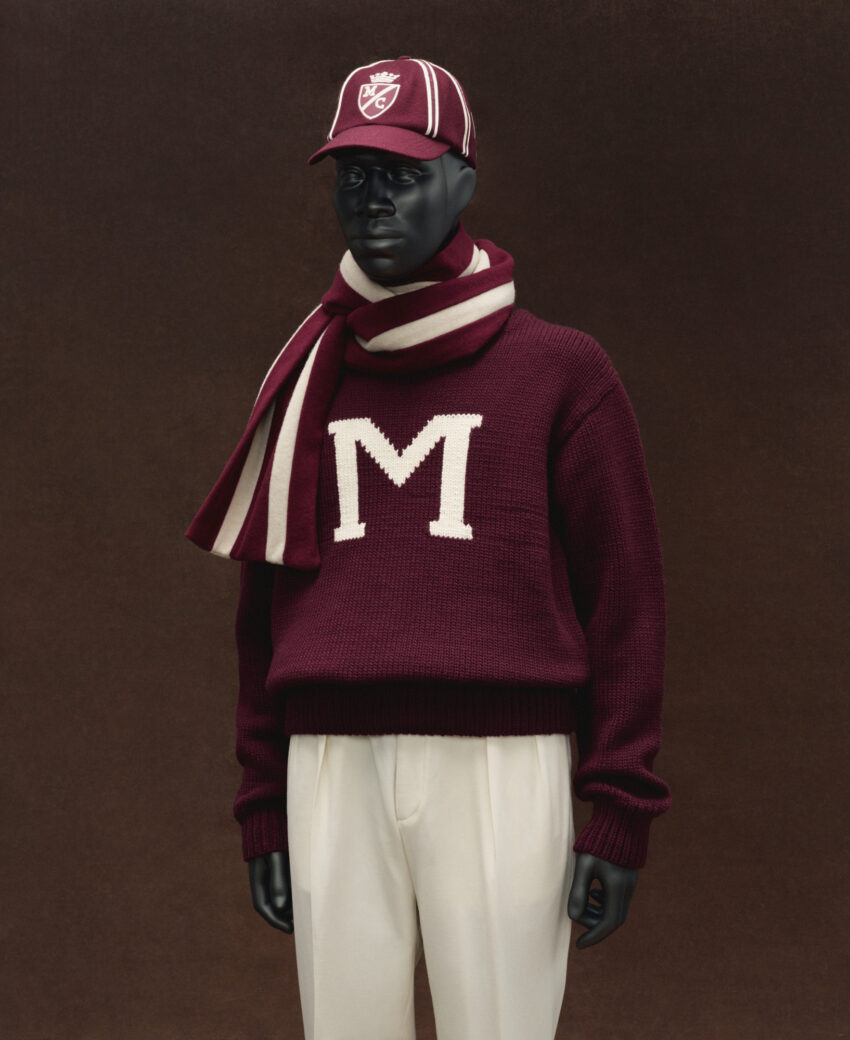
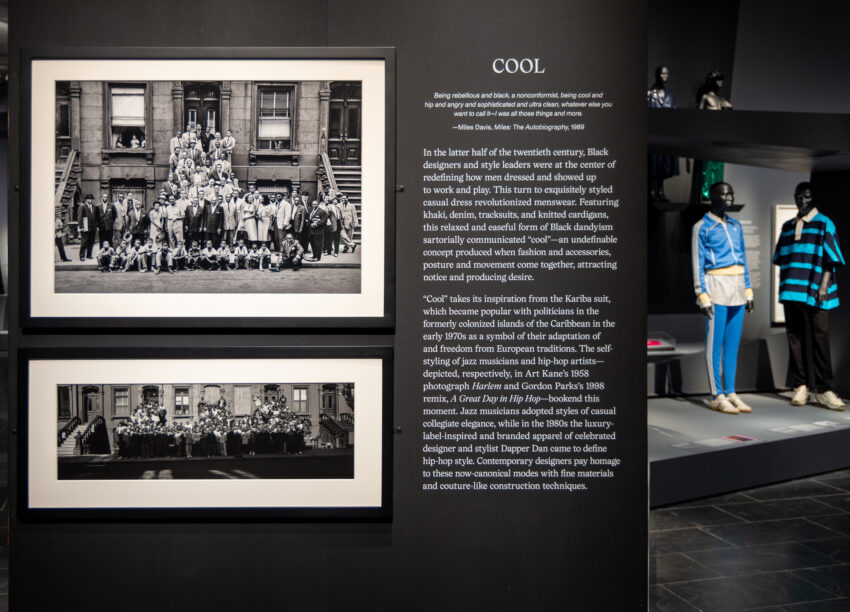
Superfine is animated by the tension between honoring Black male style and an anxiety that the stylish Black body is a spectacle for white consumption. But it is equally inspired by the delicious irony that white patriarchy has ceded the pleasures of celebrating the male body to men of color. Post-Enlightenment, the price of maintaining that patriarchal power was the renunciation of flamboyance and magnificence; the fashions of powerful men must deny that they are fashions at all. For all the fascination with “quiet luxury,” “old-money style,” or “the preppy look” (the meaning of which is reportedly shifting for Generation Alpha kids) and the inscrutable subtleties of establishment elegance, the truth is that most of what rich men wear today reflects the lazy indifference of a cloistered elite. In other words, it’s kind of dull, at least until some outsiders get their hands on it (think loafers and khakis, polo shirts or oxford button-downs under navy blazers, rumpled linen in pastel colors). It’s not an accident that this American prepster look, the uniform of WASP wealth, was made cool by Black jazz musicians such as Miles Davis (take a look at the cover of his 1958 album Milestones). It was also captured by Japanese aesthetes in the classic 1965 photography book Take Ivy, which brought the look from the United States to Japan. The style was codified by a Jewish woman, Lisa Birnbach, author of The Official Preppy Handbook(1980), and refined to mass-market perfection by another Jew, Ralph Lifshitz, better known as Ralph Lauren. Superfine highlights the symbiosis between WASPy staple ensembles and Black panache with references to the well-dressed men of Morehouse College and hip-hop artists obsessed with Polo Ralph Lauren, such as André 3000, Lil Yachty, and Thirstin Howl the 3rd.
When understated men’s style emerged in the mid-1700s, it was both a modernist innovation and a type of puritanical self-abnegation—a denial of the pleasures of the diabolical flesh in service of the divine intellect. When Flügel called this the Great Masculine Renunciation, he meant to suggest a profound spiritual and psychological loss. He wrote that “men gave up their right [emphasis mine] to all the brighter, gayer, more elaborate, and more varied forms of ornamentation, leaving these entirely to the use of women, and thereby making their own tailoring the most austere and ascetic of the arts.” Arguably, men have resented this renunciation ever since, and their ressentiment has taken many forms: for a few, the illicit pleasures of cross-dressing; for many more, the destructive obsessions of repressed desire. But those men who were denied masculine privilege were free—or at least freer—to indulge in the expressive sartorial privileges enjoyed by men of past eras. They had less to lose. Black style, as seen in Superfine, developed because Black men renounced the Great Masculine Renunciation and embraced their sensuality, indeed their essential humanity, the inextricable connection between mind and body.
This may explain the stereotype of the oversexed Black man: Black men appear to be more open to the kind of sexiness that European men once had but rejected in favor of Enlightenment cerebralism. This stereotype reflects the equal measures of contempt and envy characteristic of white racism, the photographic negative image of Superfine’s bittersweet narratives of Black style. The exhibition’s signature innovation is its focus on the importance of clothing to Black male sensuality. It contradicts the racist stereotype that finds Black sex appeal exclusively in the animalistic precultural reflexes of the body. Fashion unavoidably upends the mind-body dichotomy; it is the domain where mind and body are most conspicuously integrated.
Fashion communicates both sensuality and status. Here, too, Superfine
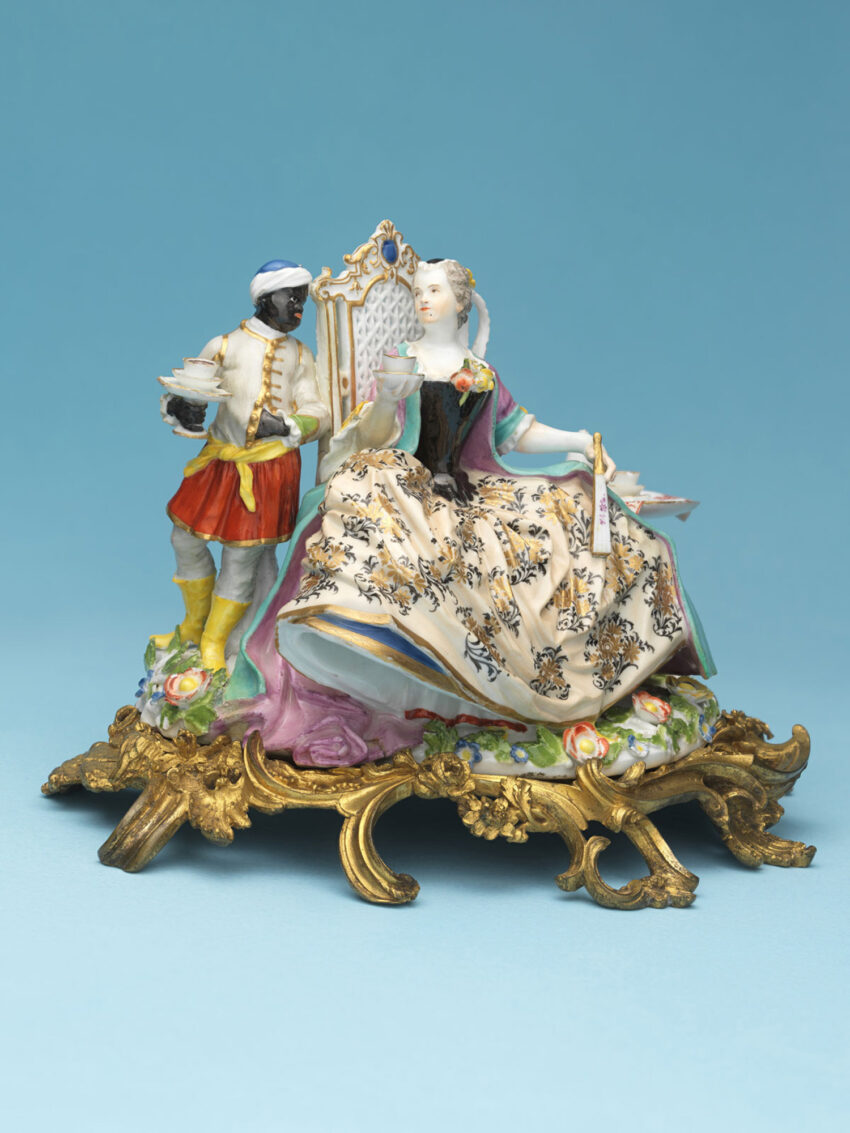
tells a complex, poignant story. Elegant attire can be a sign of distinction or of subjugation, a Savile Row suit or a tailored livery. The exhibition uses the example of Black people as fetishized commodity objects: “To own a Black attendant was a form of conspicuous excess that signified wealth, a taste for the exotic, and possible colonial connections,” writes curator Adrienne L. Childs in her contribution to the catalog. The exhibit features several examples, including a Meissen porcelain figurine from around 1740 that depicts a sumptuously dressed white woman exchanging admiring glances with her jet-black attendant, who is dressed in an elaborate livery and exotic turban. In another image, made circa 1770 by Louis de Carmontelle, a white matron plays piano while a turbaned and liveried young Black man sits looking up at her with rapt admiration. An illustration published in Galerie des modes et costumes français, a 1779 series of costume plates, depicts a Black servant, again in a lavish livery and turban festooned with ostrich feathers, holding the train of a white woman’s voluminous skirt. These exoticized Black dandies may be the precursors to the notorious “house Negroes” lampooned by Black nationalists such as Malcolm X: pampered house pets, or perhaps kept men, as the images suggest an intimacy greater than that of master and servant. For example, an English print from 1773 shows an elegantly dressed Black man with hideously exaggerated features fencing with a white woman. Above them is the caption: The D------ of [. . .] playing at Foils with her favorite Lap Dog Mungo after Expending near £10000 to make him a ------. (Contemporary audiences may have recognized the reference to Catherine Douglas, the Duchess of Queensberry, and her servant and rumored lover, Julius Soubise, an enslaved man born in Saint Kitts with whom she scandalized English high society.)
Livery was a sign of servitude but also of privilege in the social economy of slave society. Many whites resented the costly attire worn by Black people, even when the clothing was a sign of bondage. Status envy went hand in glove with sexual envy: One letter to the The South-Carolina Gazette in 1772 complained that “there is scarce a new mode . . . which favorite
Black and mulatto . . . slaves are not immediately enabled to adopt.” Another commenter made the insinuations explicit, inveighing against the “scandalous Intimacy . . . [between] Sexes of difference Colours.”
The Black person dressed in high-status clothing was an object of envy, ridicule, and fear. Superfine includes several cartoons caricaturing risibly dressy Black people and ridiculing their English—evidence that well-dressed Black people made white supremacists uneasy. A section titled “Respectability” looks beyond such mockery to explore how refined clothing presented a challenge to racism: a welcome reassessment of the often-derided “respectability politics” that today often evoke the image of a toadying “house Negro” desperate for the approval of whites.
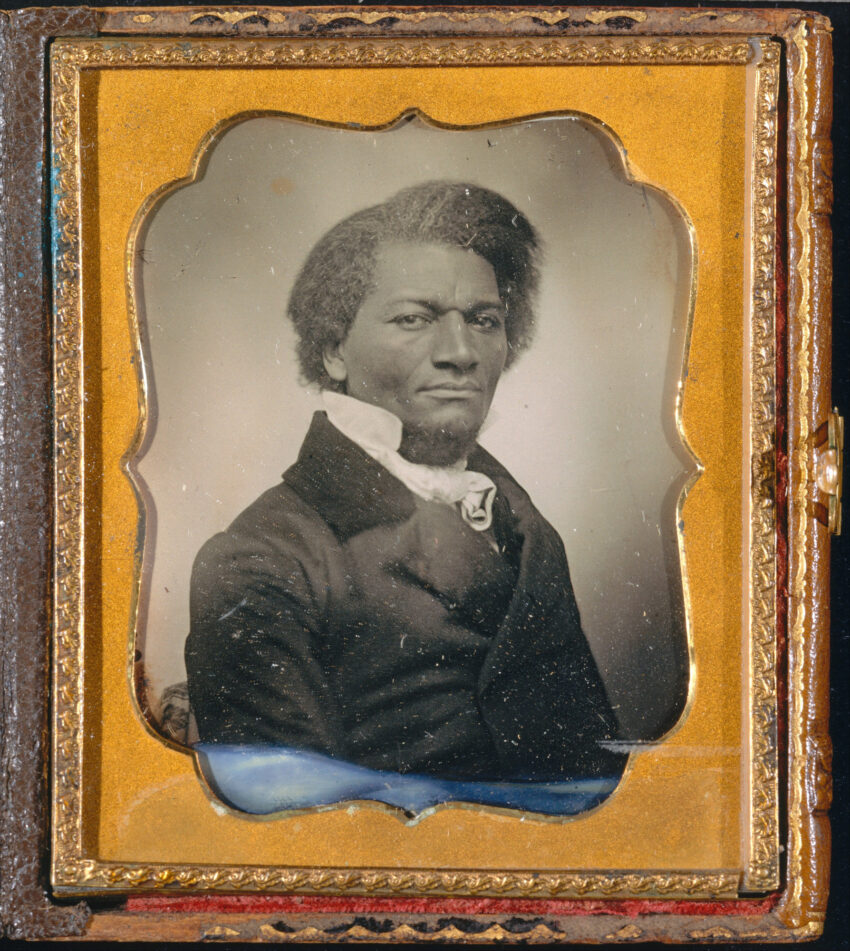
Frederick Douglass and W. E. B. Du Bois, fierce radical critics of American society and giants of the struggle for racial justice, were also well-known dandies. The curators have assembled an intriguing set of images: Douglass’s familiar profile, long graying hair swept back, dressed in a three-piece dinner suit; a photo of a rakish Du Bois in a perfectly tailored morning suit; a copy of Du Bois’s 1911 receipt from Newman & Son Tailors in London (for a gray cheviot morning coat and vest with “fancy worsted trousers,” a worsted gray lounge suit, and a brown cheviot lounge suit, settled in cash for a total of thirteen pounds). The images rebuke the tired assumption that dressing well is establishment ingratiation, or that serious men are above paying attention to their appearance; the enviable panache of these civil-rights legends not only humanizes them but also adds to their stature. These Black dandies knew that elegant attire was a quiet but confident assertion of self-respect.
Of course, Black style doesn’t always take a respectable form. The zoot suit, with its outrageous full trousers, exaggerated long tails, wide shoulders, and wide-brimmed hats, was a social statement of a different kind. The style gained popularity during the 1930s and ’40s. It was sufficiently provocative to cause riots, which in 1943 raged for weeks between zoot-suited Latinos and white servicemen in Los Angeles. Unlike the politically forthright and upright dandyism of Douglass and Du Bois, the zoot suit—loose, flowing, drapey—reflected a new type of social disaffection and anomie that later came to define the psychology of the beat, hippie, and punk subcultures. The zoot-suiters were rebels without causes over a decade before James Dean, sporting a distinctive countercultural style that spread from Black dandies to Mexican, Asian, Irish, and Italian ethnic communities. The Mexican poet Octavio Paz said of the zoot-suited pachucos: “They are instinctive rebels. . . . The pachucos do not attempt to vindicate their race or the nationality of their forebears. Their attitude reveals an obstinate, almost fanatical will-to-be, but this will affirms nothing specific except their determination . . . not to be like those around them.” By contrast, writer Ralph Ellison saw the zoot suit as a cryptic political statement, the sign of a social disenchantment that could be harnessed to a positive politics. A “major problem . . . is that of learning the meaning of myths and symbols which abound among the Negro masses,” he wrote in a 1943 essay for TheNegro Quarterly. “For without this knowledge, leadership, no matter how correct its program, will fail. . . . Perhaps the zoot suit conceals profound political meaning . . . if only Negro leaders would solve this riddle.”
The zoot suit brought theatricality to the traditional three-piece suit through large volumes, bold silhouettes, and bright colors. But midcentury jazz musicians then tweaked the suit in the opposite direction, wearing it with relaxed, nonchalant disdain. Pairing slim, minimalist suits with sunglasses and casual sportswear, such as turtlenecks or polo sweaters, musicians like Miles Davis, Dizzy Gillespie, and Thelonious Monk created a hip but tailored style. Although they rejected the starched conformity of the middle American company man, these jazz players embodied a conventional Western masculine ideal in their cool, understated affect. The music they played was overtly cerebral, distinguished by theoretical movements such as modal jazz that were in conversation with the equally intellectual visual art of painters like Mark Rothko, Jackson Pollock, and Robert Rauschenberg. It eschewed the flamboyance of an earlier generation—the zoot-suited big-band leader Cab Calloway, for instance—in favor of crisp precision. Appropriately, Superfine includes Art Kane’s famous Great Day in Harlem photograph, first published in Esquire magazine in 1959, featuring many of the era’s jazz greats posed on the steps of a house on East 126th Street, dressed with effortless elegance. The iconic image stands out for many reasons, including the dearth of women: there are three in a group of nearly sixty musicians. This jazz triumphed in formal style. It was aloof and aggressively masculine, a Great Masculine Renunciation of a sort. Their look became popular with white hipsters who wanted countercultural flair but were invested in masculine power: in varying iterations, it became the signature costume of modern style icons such as Frank Sinatra, Dean Martin, Steve McQueen, and even the fictional James Bond.
Dandyish refinement of masculinity can be understood as a bid for an intensification of its status and power. It is both critical and celebratory. Critical because its overt, unapologetic embrace of beauty and adornment cuts against the aesthetics of reserve that has defined conventional masculine virtue since the Great Masculine Renunciation. Celebratory because the dandy does not reject conventional masculinity; he refines it. The archetypal dandy was Beau Brummell, an English Regency–era man-about-town known for the radical understatement of his dress and meticulous attention to invisible details. His peers noted, admiringly, that he thwarted imitators because there was nothing to copy.
When Superfine highlights the glamour and virility of notorious playboys such as the basketball player Wilt Chamberlain, it flirts with the sex appeal of the heedless womanizer: the line between male sex appeal and male sexual dominance is both blurry and mobile. Theorists of intersectionality would argue it’s no good to say that the racial injustices suffered by Black men justify their embrace of gender privilege. Yet men dressing in a masculine-coded way risks reinforcing gender relations that have been organized around male dominance. One could say something similar about the relationship between Western dress and racial hierarchy—an issue that Superfine grapples with in its extensive treatment of slave livery. But while the Black dandy appropriates and subverts the racial significance of Western dress, he simply exploits its gendered status symbolism. So what is the alternative?
My observations here are a form of self-criticism. Miles Davis and James Bond are two of my own enduring style inspirations, and I am not willing to trade in my tailored sports jackets and trousers for a skirt, a ruffled blouse, or a dashiki, thank you very much. Likewise, it would ask too much to expect Superfine to confront “the patriarchy” at the expense of its own primary undertaking. Still, its frank treatment of the ambiguous racial politics of Black dandyism stands in contrast to its reticence around questions of male dominance and only hints at what a more intrepid analysis might reveal.
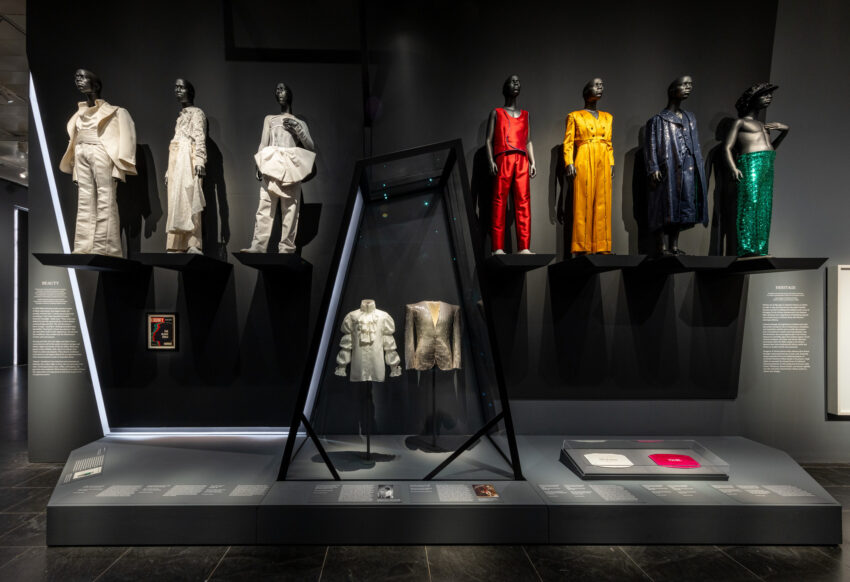
Superfine does hint at an alternative in a section called “Beauty,” which features flamboyant men’s fashions, some of which come close to what we might today describe as “gender-fluid.” There’s the Afrofuturism of 1970s funk superstars Earth, Wind & Fire, who wore vivid colors and patterns evoking African textiles and Summer of Love tie-dye. It gives us the femme style of disco-era Sylvester—sequined and beaded fabrics, hot-pink satin—and the neo-Edwardian magnificence of 1980s Prince, with his crushed velvet, ruffled shirts, and Cuban-heeled boots. But other than Sylvester, these experimentations with feminine style lie comfortably within the cis-male tradition of the sensitive romantic that began in the time of Lord Byron. The ladies love a player who’s man enough to show his feminine side.
The exhibits on display in Superfine fall into two categories: archival garments that serve as tangible examples of the clothing that appears in photos and historical accounts, and fashions from the last three or four years that are in conversation with history. As accomplished, beautiful, and interesting as they are, only a few of the contemporary pieces suggest anything directly related to the theme of the exhibition. It’s only in combination with one another and with the archival materials that they cohere into a series of meditations on Black dandyism. This isn’t a bug; it’s a feature that drives home a vital truth about Black dandyism and indeed about what is somewhat ponderously called “the Black experience”: they are irreducibly cosmopolitan phenomena.
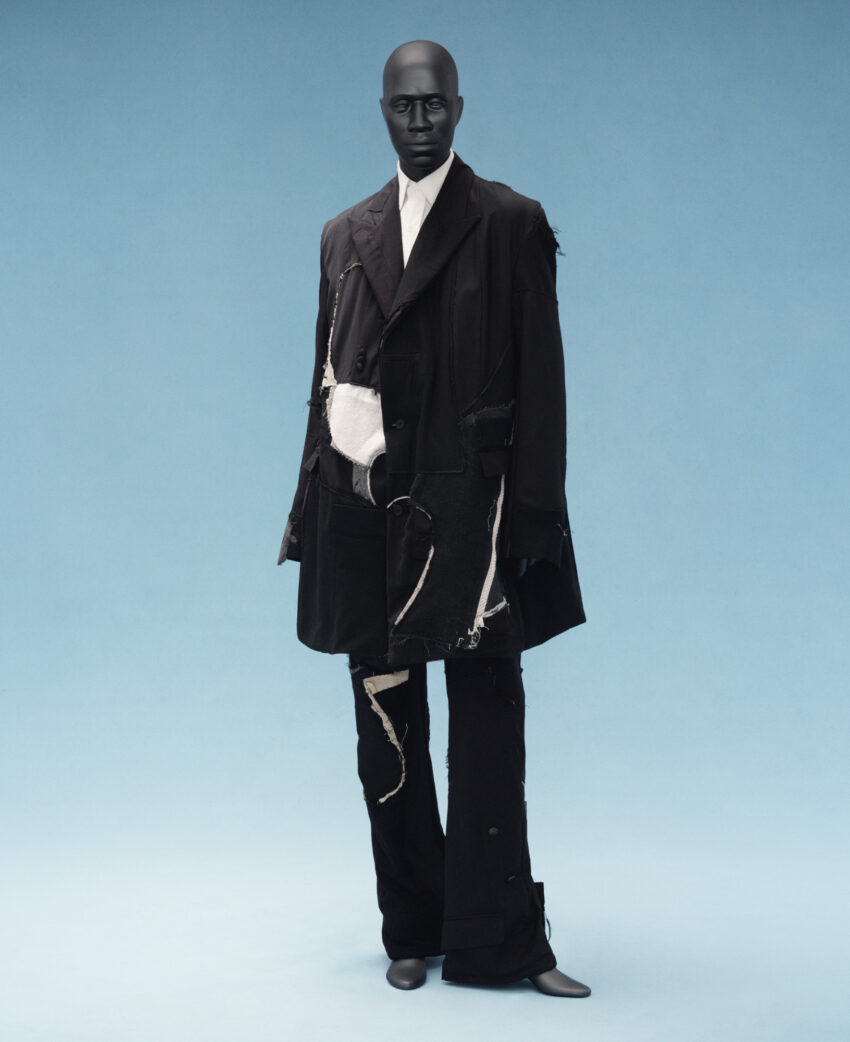
Appropriately, the exhibition ends with a section titled “Cosmopolitanism,” which makes this point a touch too literally, featuring images related to air travel, such as an Air Afrique bag whose pattern suggests both African textiles and Scottish tartans. (It’s intriguing to note that Black Codes in the American South that forbade Black people from wearing refined clothing specified that they wear something called “Negro cloth,” often in a tartan pattern.) The juxtaposition with older garments makes a subtle, tentative case for an Afrocentric aesthetic. Yet only a few of the contemporary fashions show any obvious African influence: a beautiful caftan, made in 2020 by Patience Torlowei, that almost looks like a batik print; a two-piece suit, crafted by designer Emeric Tchatchoua, with a colorful pattern that evokes both African textiles and the designs of Coco Chanel; and the late, great Virgil Abloh’s austere black-and-white rendering of kente cloth for Louis Vuitton in 2021. The other fashions speak not to Africa but to the diaspora. There is a deconstructed suit by Who Decides War (Ev Bravado and Téla D’Amore) and a 2025 streetwear-meets-Ivy ensemble by MAINS—sneakers and sweatpants paired with a collegiate shirt and tie, which resonates with a preppy ensemble from Ralph Lauren’s Morehouse Collection (2019–22). None of these beautiful garments standing alone would suggest either Blackness or dandyism. Rather, the impression is that the Black experience is inseparable from the cosmopolitan experience of what people used to call “Western civilization.”
Race, at least as we know it today, is a by-product of the colonial encounter. These sartorial assertions of a distinctive Black aesthetic use the visual language of Western power and the symbolism of racial hierarchy in an effort to subvert them. Superfine demonstrates the dramatic, improbable success of this subversion. The streetwear-meets-preppy style of cult brands like Aimé Leon Dore traces its DNA to Black urban trends. Gucci has collaborated with hip-hop tailor Dapper Dan, who made his name in the 1980s appropriating the logos of major fashion brands for his own luxury streetwear designs. Even Ralph Lauren now designs in conversation with the innovations that hip-hop artists and Black fans of the brand brought to its country-club garments. If Black style is a patois of Western vestimentary idioms, all of Western fashion has come to speak with a Black accent.
Superfine emerges in the aftermath of the Black Lives Matter demonstrations, on the heels of a fleeting moment when racial justice was a priority for mainstream institutions. I wonder whether the Met would decide to commission such an exhibition in today’s poisoned political climate, as the federal government attempts to silence any discussion of racial injustice or the experience of nonwhite people. Superfine is an example of what those silenced conversations can offer: a nuanced examination of the central role Black culture has played in the development of cosmopolitan Western society. It shows the importance of fashion to the eternal human struggle for liberation and self-respect.
Richard Thompson Ford is a professor of law at Stanford University and the author of Dress Codes: How the Laws of Fashion Made History.
Newsletter
Sign up for The Yale Review newsletter to receive our latest articles in your inbox, as well as treasures from the archives, news, events, and more.