Of course it’s nice when the eye can be at peace, when it doesn’t get tangled up in knickknacks, when the drawers open silently and then close again as if by magic. It’s nice to have bare tables where no dust falls, only light. It’s nice when everything is made of glass and you can see through it, because nothing else is there. Emptiness is nice. Who doesn’t like to make a purchase if the salesman places a single pair of trousers on a frosted glass countertop lit from below? Then those trousers are the last thing on earth that casts a shadow, and the counter with its bluish shimmer turns out to be an altar that extends from Berlin to Vienna, from Vienna to Tokyo, from Tokyo to New York, and from New York perhaps to heaven or hell, gradually narrowing as it disappears from view.
Junk
Jenny Erpenbeck,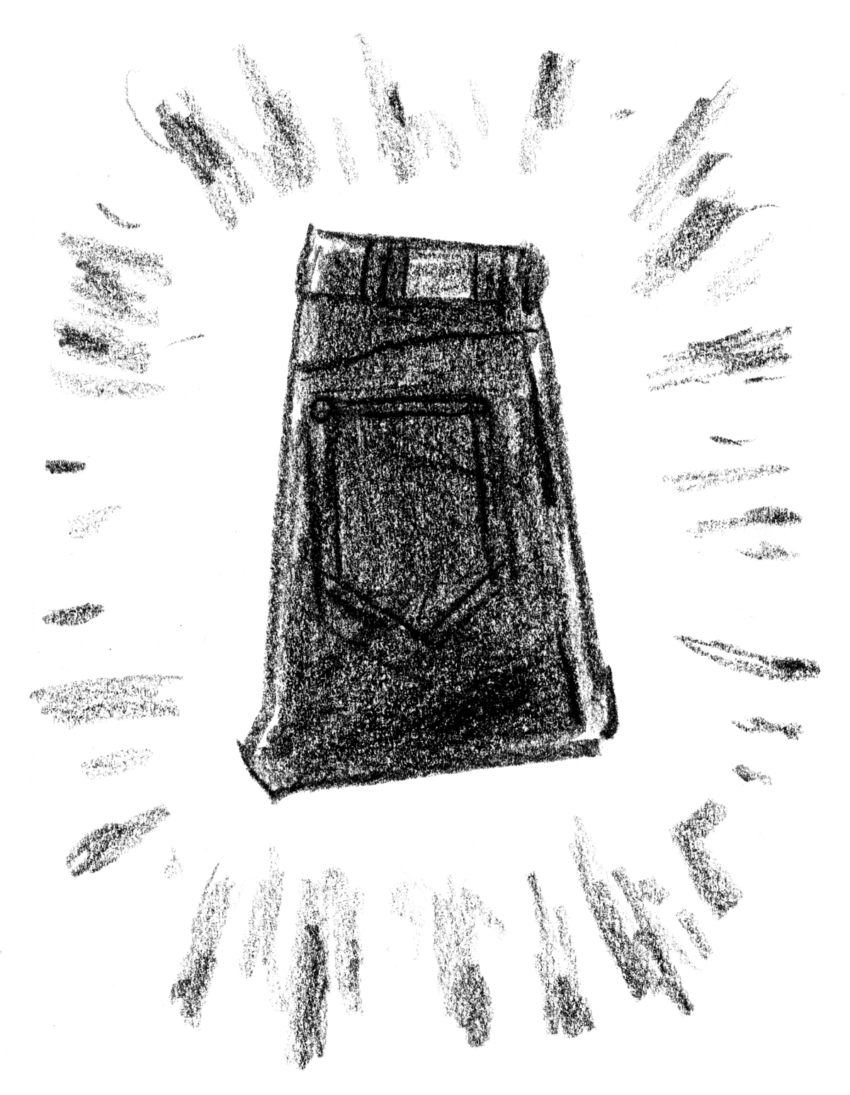
the words German East Africa are still legible on my battered, dusty globe. The jug with the polka dots was my great-grandmother’s milk jug, my great-grandmother who mastered the art of peeling a potato in a single strip. During the war, my grandmother made that teddy bear for my mother out of a gray army blanket. My uncle kept matches with multicolored sulfur heads in that little brass box for me to play with—you couldn’t find them anywhere else in the East. The postal scale on my desk belonged to a friend who passed away; when I stand up on my desk to pull down the blinds, it bobs gently up and down. All year round, an ancient record player sits under the piano, waiting for Christmas, because it’s only at Christmas that we put the metal discs on the turntable and crank it up: first “Silent Night” and then, when it gets late, “La donna è mobile.”
Support Our Writers
The Rhinelanders, Bavarians, and Swabians I meet here in Berlin tell me they prefer the Japanese style, they say they love that emptiness. No Persian apartments, please, they say, thinking of the Persian carpets they inherited. Is it really just because German East Africa doesn’t exist anymore? Or did Rhenish, Bavarian, and Swabian great-grandmothers lack the skill to peel potatoes in a single strip? Did Rhenish, Bavarian, and Swabian uncles neglect to keep colorful matches around for the length of an entire childhood? Do friends in other German states have eternal life? Maybe the Rhinelanders, Bavarians, and Swabians are simply too far away from home. Maybe the brothers and sisters they left behind now reside where they once did, in dusty lairs in Rhineland, Swabia, or Bavaria that are full of junk, just like mine, because Berlin is my home.
But no, Berliners like the Japanese style too. I can see that clearly: Sunday after Sunday, there’s a flea market outside my window, the flea market is full—full of junk, full of people who want to look at the junk but don’t want to own it. People stroll around and leaf through strangers’ photo albums, weigh the keys of long-demolished houses in their hands, smell the freshly starched linens that once belonged to someone else’s grandmother: If you’re feeling tired and weary, a cool bath will help you, dearie! As these people grew up, their heads rose slowly above the piles of things their families had left behind, grandmother’s scraps of wool and fabric slipped off them and into the donation pile, stacks of plates and cups from the postwar period were pushed aside and smashed; they crumpled the mountain of paper—father’s letters, mother’s rental contracts, their own notes from their school days—under their feet, flailing for air with both arms as if they were drowning. Now they’re free to wander around the flea market, and they might buy an orange egg cup to give to someone as a gift. Maybe they’ll even buy someone else’s diary, written in shorthand which they can’t read and don’t need to. There’s so much to inherit these days, so many memories, it’s just too much to bear. We’ve been at peace for so long here that everything we have is cheap, but emptiness will soon be priceless.
“Junk” is taken from Things That Disappear by Jenny Erpenbeck, translated by Kurt Beals, which will be published by New Directions on October 7, 2025.